
WINE TWO
YOUNG RIESLING
Freshness, finesse and a little zing.
Riesling is one of the great white wine varieties of the world, and it's a variety we particularly love.
It thrives in cool climates, where a long, gentle ripening period helps preserve its natural acidity and develop delicate, expressive flavours.
Our young Riesling showcases the freshness and vibrancy of the variety.
What to look for
With your eyes: Expect a pale straw colour, sometimes with a subtle green tinge.
With your nose: Look for citrus characters such as lemon and lime, perhaps with delicate floral notes.
On your palate: Notice the crisp acidity, freshness and delicate citrus flavours.
Our current Riesling also displays a subtle flinty mineral character.
DID YOU KNOW?
Riesling is one of the great white wine varieties for ageing.
Its naturally high acidity acts a little like a backbone, helping the wine retain its freshness and balance over many years.
This means that a well-made Riesling can develop beautifully in the bottle, often becoming a very different wine from the fresh, fruity youngster it once was.
Why does it work with food?
Riesling is one of the most versatile food wines around.
Its natural acidity makes it a wonderful partner for seafood, while its aromatic character works beautifully with herbs, spices and Asian-inspired flavours.
We've paired our young Riesling with a local Brie.
The creamy, rich texture of the cheese provides a lovely contrast to the wine's crisp acidity. The wine refreshes the palate, while the cheese softens the perception of acidity.
Your tasting moment
Notice how the acidity makes your mouth water.
Now try a bite of Brie and return to the wine.
Does the wine seem softer, sharper or more aromatic?
Can you appreciate how the creamy texture of the cheese and the crispness of the wine work together?

WINE THREE
AGED RIESLING
The magic of time.
Here's where things get really interesting.
Riesling is one of the world's great ageing varieties. In fact, some of the most extraordinary white wines are Rieslings that have spent years quietly developing in the bottle.
As Riesling matures, its character changes.
The fresh citrus and floral aromas of youth gradually evolve, often developing more complex characters such as honey, toast, dried citrus and the distinctive kerosene-like note that many Riesling enthusiasts adore.
The acidity remains an important part of the wine's structure, helping it retain freshness and balance as it develops complexity.
What to look for
With your eyes: Notice the deeper golden colour compared with the young Riesling.
With your nose: Take your time. Look for layers of aroma and the development of mature characters.
You might notice honey, toast, dried citrus or even a faint petrol or kerosene-like character.
On your palate: Notice the interplay between freshness, complexity and texture.
DID YOU KNOW?
That distinctive petrol or kerosene-like aroma sometimes found in aged Riesling is associated with a naturally occurring aroma compound called TDN.
Its full chemical name is 1,1,6-trimethyl-1,2-dihydronaphthalene. Fortunately, most wine lovers are happy to call it TDN!
It develops during bottle ageing from compounds originating in the grape.
Some Riesling enthusiasts love this characteristic, while others prefer their Riesling without it. It's one of the things that makes aged Riesling so fascinating.
Why does it work with food?
Aged Riesling has a wonderful affinity with food, particularly seafood.
Its acidity provides freshness, while its developed flavours can complement richer and more complex dishes.
For this wine we've chosen something from our own farm: our home-grown olives.
They're not too salty and not too bitter, making them a lovely accompaniment to the wine's developed flavours and natural acidity.
Your tasting moment
If you can, compare the young and aged Rieslings side by side.
Both are the same grape variety, but time has changed their personalities.
Which do you prefer?
Can you identify the flavours that have developed with age?
Now try an olive.
Notice how its gentle saltiness and savoury character interact with the wine.
And if you particularly enjoy our olives, you're not alone!
WINE FOUR
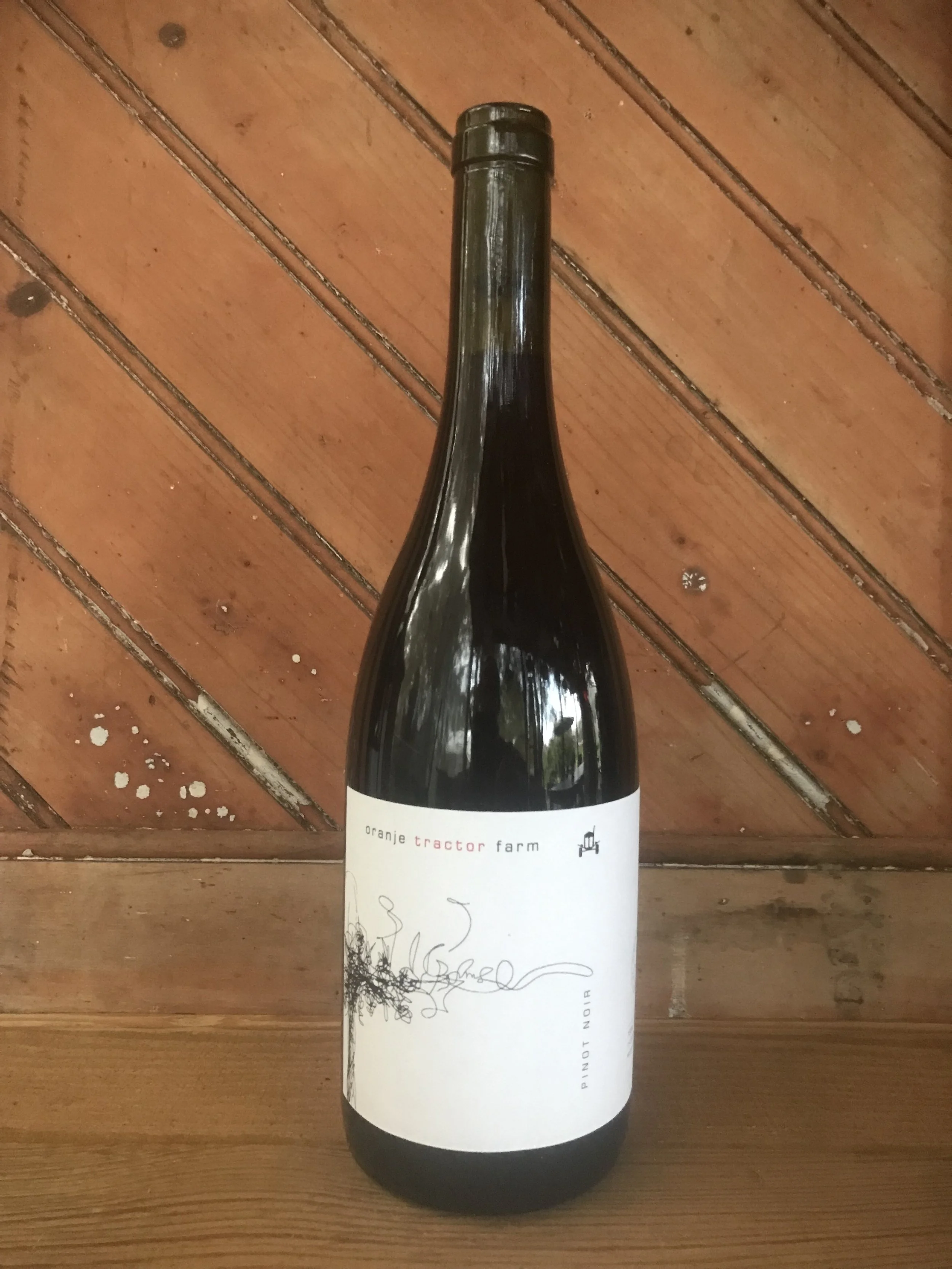
PINOT NOIR
Elegance rather than muscle.
Pinot Noir is one of the most celebrated red grape varieties in the world, but it can also be one of the most misunderstood.
Unlike varieties that rely on deep colour, powerful tannins and big flavours, Pinot Noir is often about delicacy, fragrance, texture and subtlety.
It is notoriously difficult to grow well, which is one reason winemakers and wine lovers find it so fascinating.
Our cool maritime environment is well suited to producing Pinot Noir with freshness and elegance.
What to look for
With your eyes: Pinot Noir is usually lighter in colour than many other red wines. Look for ruby or garnet tones.
With your nose: Look for red fruit characters such as raspberry and cherry, together with savoury or earthy aromas.
On your palate: Notice the soft fruit, gentle tannins and the savoury, forest-floor characters that make Pinot Noir so distinctive.
Our Pinot Noir is soft and fruity, with more than a hint of the forest floor, and has been matured in premium French oak.
DID YOU KNOW?
Pinot Noir has a reputation for being one of the most challenging grape varieties to grow.
Its relatively thin skins make it susceptible to disease, and it can be very particular about its growing conditions.
But when everything comes together, Pinot Noir can produce wines of extraordinary elegance, complexity and longevity.
It's a variety that often rewards patience and careful attention in the vineyard.
Why does it work with food?
Pinot Noir is a wonderful food wine because it combines freshness with relatively gentle tannins.
It doesn't overpower food and is particularly good with dishes that have earthy, savoury flavours.
We've paired this wine with a local washed-rind cheese from Dellendale Creamery in Denmark.
Washed-rind cheeses have a distinctive savoury character which can be a lovely companion to Pinot Noir's earthy, forest-floor flavours.
Your tasting moment
Notice how the wine feels in your mouth.
Compare its structure and texture with the Rieslings.
Can you identify the savoury characters alongside the fruit?
Now try the cheese.
Does the earthy character of the Pinot Noir complement the cheese's savoury flavours?

WINE FIVE
MISTELLE RIESLING
A little bit of wine-making magic.
We've saved something rather special for last.
Mistelle is not an everyday wine style, and it gives us an opportunity to showcase another side of Riesling.
Our Mistelle Riesling has a fascinating story.
It combines the character of botrytised Riesling grapes with the winemaking technique of mistelle production.
Botrytis cinerea, sometimes called noble rot, is a beneficial fungus that can concentrate sugars and flavours in grapes under the right conditions.
Mistelle is made by combining unfermented grape juice with alcohol, rather than allowing all the grape sugars to ferment into wine. This preserves the natural sweetness of the juice.
Our version is a slightly sparkling, fortified, botrytised Riesling.
It's an unusual combination, and that's just how we like it!
What to look for
With your eyes: Notice the colour and any gentle sparkle.
With your nose: Look for concentrated fruit, floral and honeyed characters.
On your palate: Notice the sweetness, richness and texture, balanced by Riesling's natural acidity.
DID YOU KNOW?
Botrytis cinerea is a fascinating little fungus.
Under the right weather conditions, it can transform grapes into something quite extraordinary.
It causes water to evaporate from the berries, concentrating sugars, acids and flavour compounds.
The result can be grapes with intensely concentrated flavours, often described as honeyed, marmalade-like, dried apricot or candied citrus.
This is why botrytised wines are among the world's most celebrated sweet wines.
Why does it work with food?
Sweetness, acidity and texture give this style some wonderful food-pairing possibilities.
We've served this wine with our own dried fruit and macadamia nuts.
The fruit complements the wine's concentrated flavours, while the macadamias add a lovely nutty texture.
It's also fun to try it with something salty or savoury, so go back and taste an olive if you haven't eaten them all already.
We know… they're so delicious, it's hard to stop!
Your tasting moment
Take a small sip and let the wine linger.
Notice the relationship between sweetness and acidity.
Now try the dried fruit and macadamias.
Does the fruit bring out similar flavours in the wine? Does the nutty texture change your experience?
And if you have saved an olive, try that too. The contrast between sweetness and saltiness can be particularly delicious.